
Dodging Difficult Clients: Red Flags Lawyers Should Know
Dealing with difficult clients can present challenging situations. Recognizing red flags like unreasonable requests from a potential or existing client require careful consideration and managing expectations from the outset.
What Are the Warning Signs of a Difficult Client?
Unreasonable expectations
Listen carefully to the client before you undertake representation. Early conversations to explore the client’s desired outcome and establish the boundaries of potential legal recourse are essential to managing client expectations and preventing misunderstandings later in the representation. If a client insists that you pursue a specific course of action or demands that you take immediate steps—while ignoring your explanation of what legal services you can realistically provide—they are likely to be a difficult client. Do not agree to represent them.
Lack of cooperation
Clear and consistent client communication practices can prevent many cooperation issues before they arise. Clearly outline the client’s duties to be truthful and cooperative in your fee agreement and engagement letter. Establish how and when communication will occur, and make sure the client understands their responsibilities.
You may find it helpful to share the Ohio Supreme Court publication “A Consumer’s Practical Guide to Managing a Relationship With a Lawyer.” See “The Duties of a Client” on pages 15–16. This resource can help set expectations and reinforce the client’s role in the attorney–client relationship.
Failure to pay your bill
If a client fails to pay their bill, give reasonable warning that you will withdraw unless the obligation is satisfied. See Prof. Cond. R. 1.16(5). If payment still isn’t made after that warning, follow through and withdraw. If you are considering this step, contact OBLIC Loss Prevention for assistance.
The client who begs you to stay
If you have given reasonable warning under Prof. Cond. R. 1.16 and have decided not to represent, to terminate, or have already terminated the representation—do not allow pleading or pressure to change your decision.
If you need support sticking to that decision, contact OBLIC Loss Prevention. Remember: when you’re out — stay out.
For more guidance, read “Strategies for Dealing with Difficult Clients.” This OBLIC article includes links and guidance on:
- Using our Client Inquiry Form
- Considering Limited Scope Representation
- Sample Evergreen Retainer
- Sample File Closing Letter
Refer to the below Best Practices for Dealing with Difficult Clients Checklist when situations arise.
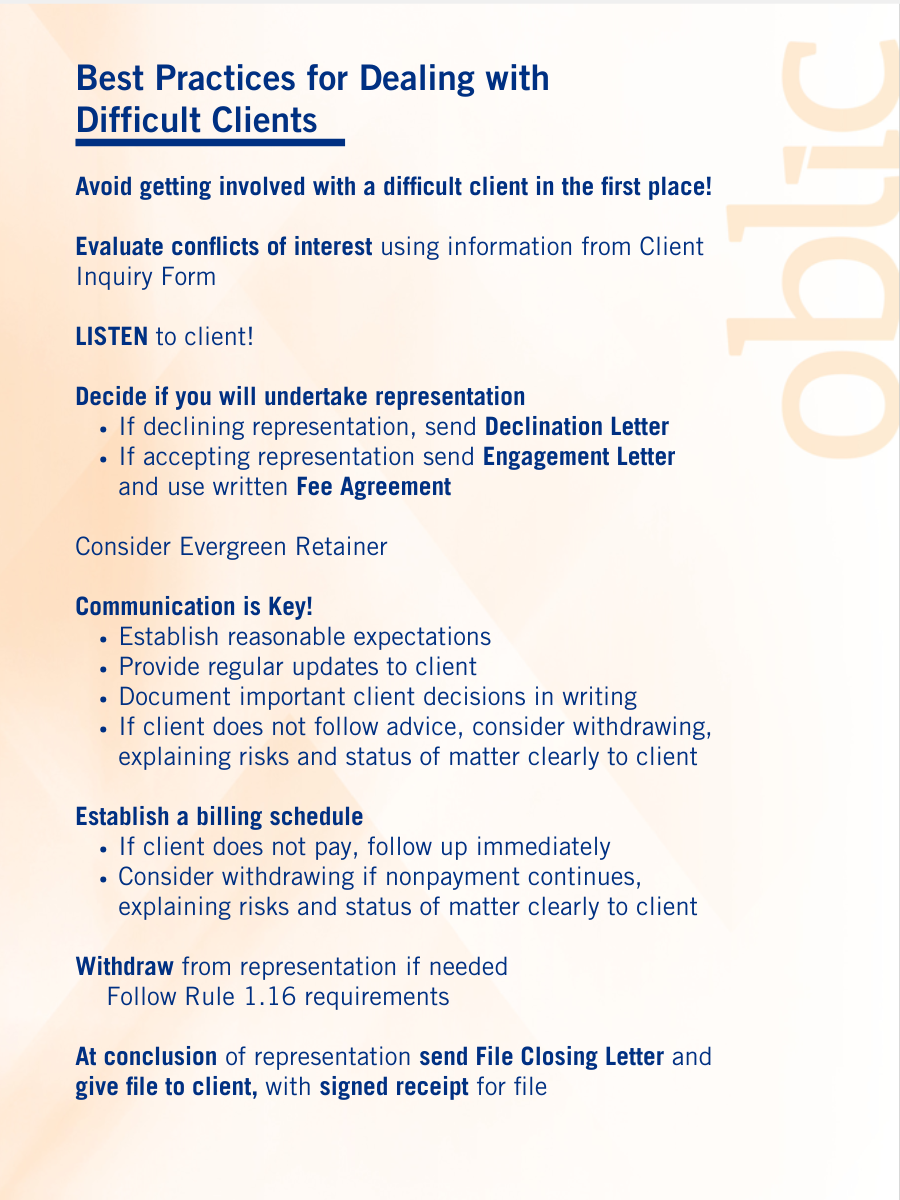
Difficult client situations are often preventable when lawyers set clear expectations, document responsibilities, and recognize early warning signs. Taking time at the start of a representation to establish communication practices and boundaries can help avoid ethical problems later. When concerns arise, consulting with OBLIC Loss Prevention can help attorneys evaluate the situation and determine the best course of action.
| Gretchen K. Mote, Esq. Director of Loss Prevention Ohio Bar Liability Insurance Co. Direct: 614.572.0620 gmote@oblic.com |
Merisa K. Bowers, Esq. Director of Marketing and Loss Prevention Counsel Ohio Bar Liability Insurance Co. Direct: 614.859.2978 mbowers@oblic.com |
This information is made available solely for loss prevention purposes, which may include claim prevention techniques designed to minimize the likelihood of incurring a claim for legal malpractice. This information does not establish, report, or create the standard of care for attorneys. The material is not a complete analysis of the topic and should not be construed as providing legal advice. Please conduct your own appropriate legal research in this area. If you have questions about this email’s content and are an OBLIC policyholder, please contact us using the information above.